



Vision is a priceless gift and ability we are addicted to. We are highly addicted to this sense and sometimes take it for granted. Photography is a technology which really sheds light as it makes you think “how hard do you have to try to get something scenically-beautiful as a scene in a machine!!!” but this struggle is the key for developing the skill of photography. This skill has two benefits one of which is obvious and the second one is not. The obvious one is that you try to develop good photographs for the enjoyment of yourself and others but in the shadow of this you start looking for good shots. You look at any scene or any view in closer details, finding the source of light, the direction, the direction of wind and even your own orientation. These things become an involuntary part of your thinking process which is why I like to call photography as an iterative skill as more you try to develop it, it in-turn develops you. You get more imaginative and creative with not plain vision but thoughts that can paint your vision.
In this article is shall be focusing on basic things which you need to look for to lay a good foundation of photography. To start with it is highly important that you are in coherence with the scene in front of you. Take a minute or two to admire the scene and store in your head. Remember only if you appreciate the scene then the viewers can appreciate it. Build a thought in your head so as to make decision of whether you like the scene and wish to capture it as it is or weather you would like to see some specifics of the scene and omit a few things. This step is what decides how your photograph will finally turn out for you and the viewers. Once you have done this, see the direction of the light which is incident on the scene overall. Then have a look at how you would like to orient your photo i.e. how would you like to see it when it comes out!!! Imagine the photo in frame or as desktop wallpaper and see if you would like it, and this where your thought process rounds off and you are ready to take the picture. Position yourself in the best angle to capture the scene and then think of the light conditions;
The shutter speed works basically like the way human eye blinks to save any image. The shutter release button triggers the shutter inside which closes and saves the incident light on the sensor which is then processed to form an image.
The exposure value is like slitting your eyes to see more carefully, i.e. it basically controls the light exposure on the image sensor making the image under exposed (dark) or over exposed (light). This maneuvering helps to tone the image for a balance of shadows verses highlights.
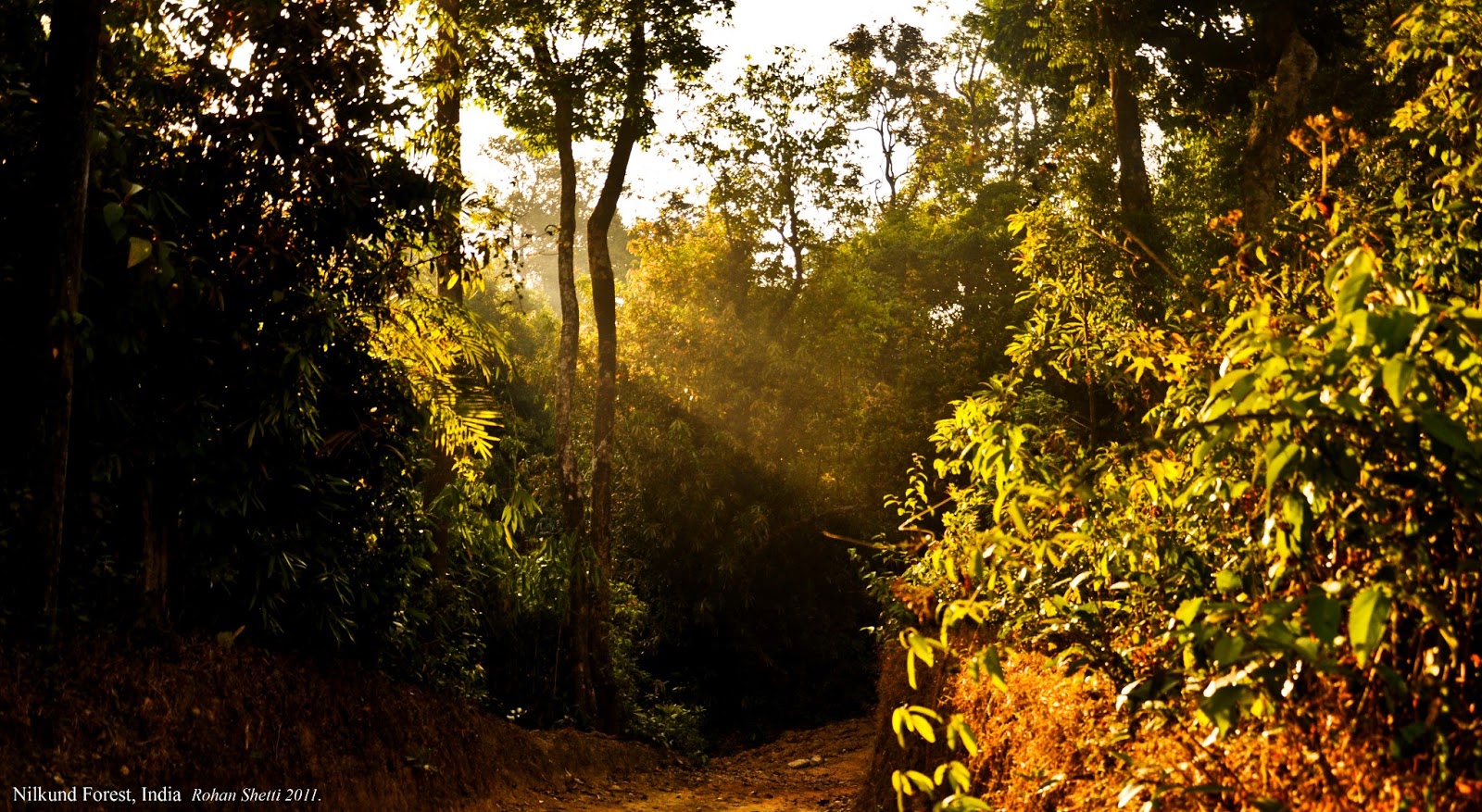
Just to give an illustration, have a look at the image below:

The meta-data of this image is as follows:
The image is shot in the Indian Rainforest; to show the significant sun rays it is important to have reduced sky highlights and enhancing shadows. Only then the rays breaking through the vegetation are clearly prominent. This shows that to have a well composed image it is important to know what you want to show the viewers and so equally important to note what you don’t want them to see or what might divert their attention in the image.
There is a saying in photography "It takes a lot of imagination to be a good photographer. You need less imagination to be a painter, because you can invent things. But in photography everything is so ordinary (David Bailey)’. Take many photos, and keep practicing with your equipment and with your thoughts; the closer the two get the better is the image.
Kind Regards,
Rohan.
In this article is shall be focusing on basic things which you need to look for to lay a good foundation of photography. To start with it is highly important that you are in coherence with the scene in front of you. Take a minute or two to admire the scene and store in your head. Remember only if you appreciate the scene then the viewers can appreciate it. Build a thought in your head so as to make decision of whether you like the scene and wish to capture it as it is or weather you would like to see some specifics of the scene and omit a few things. This step is what decides how your photograph will finally turn out for you and the viewers. Once you have done this, see the direction of the light which is incident on the scene overall. Then have a look at how you would like to orient your photo i.e. how would you like to see it when it comes out!!! Imagine the photo in frame or as desktop wallpaper and see if you would like it, and this where your thought process rounds off and you are ready to take the picture. Position yourself in the best angle to capture the scene and then think of the light conditions;
- Look at the aperture values of your camera settings (usually denoted as F value).
- See the Shutter speed (usually denoted as S).
- See the Exposure values (Usually denoted with a +- sign on the camera).
- The see the metering and focus point of where your lens is pointing.
The shutter speed works basically like the way human eye blinks to save any image. The shutter release button triggers the shutter inside which closes and saves the incident light on the sensor which is then processed to form an image.
The exposure value is like slitting your eyes to see more carefully, i.e. it basically controls the light exposure on the image sensor making the image under exposed (dark) or over exposed (light). This maneuvering helps to tone the image for a balance of shadows verses highlights.
Just to give an illustration, have a look at the image below:

The meta-data of this image is as follows:
- F stop: f: 4.2 (A moderately high aperture value)
- Shutter speed: 1/ 160 sec
- Exposure bias: - 1.3 ev.
- Focal Length: 32m
The image is shot in the Indian Rainforest; to show the significant sun rays it is important to have reduced sky highlights and enhancing shadows. Only then the rays breaking through the vegetation are clearly prominent. This shows that to have a well composed image it is important to know what you want to show the viewers and so equally important to note what you don’t want them to see or what might divert their attention in the image.
There is a saying in photography "It takes a lot of imagination to be a good photographer. You need less imagination to be a painter, because you can invent things. But in photography everything is so ordinary (David Bailey)’. Take many photos, and keep practicing with your equipment and with your thoughts; the closer the two get the better is the image.
Kind Regards,
Rohan.

